If you’ve been scrolling through restaurant franchise opportunities and feeling like every brand sounds the same, you’re not imagining it. Most pitches lean on hype. Few back it up with numbers, real outlets, or an honest answer to the question every serious investor actually asks: will this make money, and how soon?
India’s food and beverage sector is one of the strongest spaces for franchise investment right now. The QSR market is growing at over 20% year on year, and consumer habits have shifted permanently toward quick-service dining, delivery-first ordering, and health-conscious eating. For anyone evaluating restaurant franchise opportunities, that shift matters more than a polished brochure ever will.
BurgerMan is a homegrown Indian burger brand built in Chennai in 2006, with 30 or more outlets already running across Tamil Nadu and expanding through South India. It wasn’t designed on a spreadsheet. It was built for South Indian tastes, price sensitivity, and eating habits, which is exactly why it’s grown organically rather than through forced expansion.
For investors, that translates into a franchise opportunity with real performance data behind it. The investment ranges from ₹45 lakhs to ₹70 lakhs depending on format, with a 40% ROI target and a 24 to 36 month payback window. Compare that to the industry average of 15 to 25% ROI, and it’s easy to see why BurgerMan keeps coming up in restaurant franchise opportunity conversations across South India.
Three formats give investors real flexibility. Grab ‘N’ Go suits high-footfall, compact spaces like malls and transit hubs. RestoCafé delivers the full dine-in café experience for high streets and neighbourhood retail zones. Hybrid Gamezone combines dine-in, gaming, and cloud kitchen operations for investors chasing multiple revenue streams under one roof.
What separates a strong restaurant franchise opportunity from a risky one usually comes down to support. BurgerMan handles site selection, store setup, staff training, and Swiggy and Zomato onboarding before a franchise partner even opens the doors. That support continues afterward too, through operational guidance and brand-level marketing.
If you’re comparing restaurant franchise opportunities in 2026, the questions worth asking are simple. Does the brand have real outlets, or just plans? Is the ROI target backed by performance, or projection? And does the support system actually reduce your risk, or just look good in a deck?
Explore the full investment details at burgerman.in/franchise and start the conversation with the BurgerMan franchise team.
What is the investment required for a restaurant franchise like BurgerMan?
Investment ranges from ₹45 lakhs to ₹70 lakhs depending on the format — Grab ‘N’ Go, RestoCafé, or Hybrid Gamezone.
What ROI can I expect from this restaurant franchise opportunity?
BurgerMan targets 40% ROI, well above the 15 to 25% range typical of Indian QSR franchises, based on performance across 30+ live outlets.
How long does payback usually take?
The typical payback window is 24 to 36 months, depending on location and how actively the franchise partner runs the outlet.
Which regions currently have open restaurant franchise opportunities with BurgerMan?
Tamil Nadu is the core market, including Chennai, Coimbatore, Dindigul, and Kanchipuram, with active expansion across South India.
What support does BurgerMan provide to new franchise partners?
Site selection, store setup, staff training, delivery platform onboarding, and ongoing operational and marketing support.
Bangalore has never been short on food options, but the burger category has quietly gotten a lot more interesting over the last couple of years. For a long time, “burger” in this city meant one of the big international chains, the same menu whether you were in Whitefield or Rajajinagar. That’s changing. A newer set of homegrown and India-focused burger brands has started showing up, and BurgerMan is one of the names that keeps getting mentioned when people ask where to find a burger that actually tastes made, not just assembled.
If you’ve been searching for the best burgers near you in Bangalore, you’ve probably come across BurgerMan outlets on New BEL Road, in Indiranagar, and inside the WTC Brigade Gateway campus. Three very different parts of the city, three very different crowds, but the same menu and the same idea behind it.
This guide covers what BurgerMan actually offers, why people across these three Bangalore neighborhoods keep coming back, and where exactly each outlet sits so you can find the one closest to you.
Bangalore’s food crowd is picky in a specific way. This is a city full of people who’ve eaten well elsewhere, whether that’s a different Indian city or a different country altogether, and they notice when something is cutting corners. Fast food here can’t just be fast anymore, it has to hold up.
BurgerMan built its menu around freshly prepared patties instead of the pre-frozen stock that a lot of quick service brands rely on, and it’s kept that approach consistent across every outlet, whether you’re ordering near HAL 2nd Stage in Indiranagar or grabbing lunch at the WTC campus in Malleswaram. That kind of consistency is what actually earns repeat customers in a city where people have endless options and very little patience for average food.
The customer base itself is wide. Indiranagar alone brings in college-age crowds, young professionals out for the evening, and families doing a weekend outing. New BEL Road leans more residential and local. WTC is almost entirely a working lunch crowd, people on a short break who want something that tastes good but doesn’t take an hour. BurgerMan’s menu is built to work across all three without diluting itself into something generic.
There’s a solid chicken-based non-vegetarian range, and the vegetarian menu isn’t treated as a side thought either, which still isn’t the norm in this category.
A few menu choices separate BurgerMan from the standard burger counter you’d find at a mall food court.
Wheat buns are available as a swap for the regular bun, which matters to anyone trying to eat a little cleaner without giving up burgers altogether. Select outlets also offer gluten-free alternatives, though as with any fast food kitchen, it’s worth calling ahead and checking current cross-contact handling if you’re managing a serious gluten sensitivity, since shared equipment is common in this format.
For the gym-going crowd, and Bangalore has plenty of them, there are high-protein burgers built around grilled chicken. These work as a proper post-workout meal rather than just another indulgent bite, and they’re sized to actually fill you up instead of leaving you hungry an hour later. There’s also a decent grilled lineup for anyone who wants the flavor without going the deep-fried route every time.
None of this turns BurgerMan into a health food brand, and it doesn’t try to be one. It’s still a burger place first. But the options are there for people who want them, which is more than most quick service brands in this city can say.
Here’s where BurgerMan currently operates in Bangalore, along with what each neighborhood is actually like.
Address: 196, New BEL Rd, KGE Layout, R.M.V. 2nd Stage, Bengaluru, Karnataka 560094 Map: Get Directions
New BEL Road runs through one of North Bangalore’s more established residential belts, close to RMV 2nd Stage, Sanjaynagar, and within easy reach of Sadashivanagar and Mekhri Circle. It’s not a nightlife strip or a tourist stretch, it’s a genuine neighborhood, which makes it the kind of location where a good burger spot turns into a regular Friday night order rather than an occasional treat. Families, local college students, and the area’s steady apartment-dwelling crowd make up most of the footfall here.
Address: No 3282, 1, 12th Main Rd, HAL 2nd Stage, Appareddipalya, Indiranagar, Bengaluru, Karnataka 560008 Map: Get Directions
Indiranagar barely needs an introduction if you’ve spent any time in Bangalore. It’s the city’s best-known hub for cafes, bars, and late-evening food runs, with a young, well-traveled crowd that’s used to eating out often and comparing notes on where’s good right now. A burger brand doesn’t survive here on novelty alone, it has to actually hold up against a neighborhood full of options. The HAL 2nd Stage location puts BurgerMan right in the middle of that competitive, high-footfall stretch.
Address: World Trade Centre Bengaluru, Brigade Gateway Campus, 26/1, Dr. Rajkumar Road, Malleswaram, Rajajinagara, Bengaluru, Karnataka 560055 Map: Get Directions
The WTC outlet sits inside Brigade Gateway, one of Bangalore’s major mixed-use business campuses on the Malleswaram-Rajajinagar border, home to a dense mix of corporate offices, serviced apartments, and Orion Mall right next door. This crowd is almost entirely working professionals looking for a fast, satisfying lunch or an evening bite before heading home. Speed matters here as much as taste does, and it’s a very different kind of pressure than a leisurely weekend outlet faces.
If your part of Bangalore isn’t covered yet, check BurgerMan’s full locations page, since new outlets keep getting added across the city.
The grilled chicken burgers are the core of BurgerMan’s high-protein lineup, and they work well whether you’re coming straight from a gym session in Indiranagar or just want a lunch at WTC that doesn’t leave you sluggish by 3 PM. If protein is the priority, stick to the grilled fillings over the fried ones.
Swapping to a wheat bun adds more fiber than the standard white bun, which generally means you stay full longer on the same portion. It’s a small change, but it’s one that health-conscious diners across all three Bangalore outlets have been actively asking for.
Gluten-free customization is available at select outlets for anyone managing celiac disease or a gluten intolerance. Because kitchen setups and shared equipment vary by location, it’s worth a quick call to the specific outlet, New BEL Road, Indiranagar, or WTC, before you order if cross-contact is a real concern for you.
| If You Want | Recommended Burger |
|---|---|
| Highest Protein | Grilled High-Protein Chicken Burger |
| Best for Families | Veg Supreme Burger combo with sides |
| Best Vegetarian Option | Paneer Burger |
| Mild Flavors | Classic Grilled Chicken Burger |
| Spicy Burger Lovers | Peri Peri Chicken Burger |
| Health-Conscious Diners | Wheat Bun Grilled Chicken Burger |
| First-Time Visitors | Double Chicken Burger |
| Quick Office Lunch (WTC) | Grilled Chicken Burger combo |
Where is the nearest BurgerMan outlet in Bangalore? BurgerMan currently runs three outlets in Bangalore: New BEL Road (RMV 2nd Stage), Indiranagar (HAL 2nd Stage), and WTC Brigade Gateway (Malleswaram-Rajajinagar). The nearest one depends on which part of the city you’re in.
Does BurgerMan Bangalore offer healthy burger options? Yes. All three Bangalore outlets carry wheat bun alternatives, high-protein grilled chicken options, and gluten-free customization on request.
Is BurgerMan good for a quick office lunch near WTC? Yes, the WTC outlet inside Brigade Gateway is built around a fast-lunch crowd, with grilled chicken combos that work well for a short office break.
Does BurgerMan Indiranagar deliver? Yes, all BurgerMan outlets in Bangalore, including Indiranagar, support both delivery and takeaway.
Which BurgerMan burger has the highest protein? The Grilled High-Protein Chicken Burger, available at all three Bangalore outlets, leads the menu on protein content.
Is BurgerMan suitable for families in a residential area like New BEL Road? Yes. The menu balances vegetarian and non-vegetarian options, and the portion sizes and mild flavor choices work well for both kids and adults.
1. How many BurgerMan outlets are there in Bangalore? Three, located on New BEL Road, in Indiranagar, and inside the WTC Brigade Gateway campus.
2. Which BurgerMan outlet in Bangalore is best for a weekend family outing? New BEL Road tends to work well for families given its residential, less crowded setting, though Indiranagar also has family-friendly hours outside peak evening times.
3. Does BurgerMan use wheat buns? Yes, wheat buns are offered as a customization alongside the regular bun at every outlet.
4. Are gluten-free burger options available at BurgerMan Bangalore? Gluten-free alternatives are available at select outlets. It’s best to confirm directly with your nearest location before ordering.
5. Which BurgerMan outlet is closest to Indiranagar’s 100 Feet Road? The Indiranagar outlet on 12th Main Road, HAL 2nd Stage, is the closest, sitting right within the area’s main commercial stretch.
6. Can I find vegetarian burgers at BurgerMan Bangalore? Yes, the vegetarian range includes the Veg Supreme Burger and Paneer Burger, both built to be full menu items rather than an afterthought.
7. Is BurgerMan WTC outlet good for a corporate team lunch? Yes, its location inside Brigade Gateway makes it a practical choice for teams working in the campus or nearby offices in Malleswaram and Rajajinagar.
8. Does BurgerMan Bangalore offer combo meals? Yes, combo options are available across all three outlets, typically pairing a burger with sides and a drink.
9. Which BurgerMan Bangalore outlet is busiest? Indiranagar generally sees the highest footfall given the neighborhood’s overall food and nightlife traffic, especially in the evenings.
10. Why do Bangalore customers keep coming back to BurgerMan? Consistency across outlets is the main reason customers give. The taste and quality stay the same whether you’re ordering in a quiet residential pocket like New BEL Road or a high-traffic area like Indiranagar, and that kind of reliability is harder to find in this category than most people expect.
Locations, menu items, and availability are current as of 2026. For the latest updates, visit BurgerMan’s official locations page.
Let’s be honest. There are a lot of franchise opportunities out there, and most of them sound great on paper. Big promises, polished pitch decks, and numbers that somehow always look better than reality. So when someone asks whether a restaurant franchise is actually worth the investment, they deserve a straight answer — not a sales pitch dressed up as advice.
This post is that straight answer. We’re going to walk through what makes a food franchise genuinely worth your capital, what the BurgerMan restaurant franchise actually offers, and whether it’s the kind of opportunity serious investors should be paying attention to right now.
If you’re at the point where you’re evaluating food franchise options and want clarity over hype, read on.
Ten years ago, the restaurant franchise model was fairly simple. You paid a brand for the right to use their name, they gave you a manual, and you figured out the rest. Location, staff, marketing, delivery — most of it landed on your shoulders.
That model still exists, but it’s increasingly the wrong one to back.
The food business in India has fundamentally shifted. Delivery platforms like Swiggy and Zomato have changed how consumers discover restaurants and how revenue flows. Cloud kitchen operations have opened up new revenue streams. Health-conscious eating habits have reshuffled which brands consumers return to versus which ones they try once and forget. And rising real estate costs mean that a restaurant franchise with flexible format options is worth significantly more than one that locks you into a single expensive setup.
The investors doing well in the food franchise space right now aren’t just buying a brand name. They’re buying into a system that works across multiple revenue channels — one that’s already been tested at scale, not just on a spreadsheet.
That’s the context within which the BurgerMan restaurant franchise makes the most sense to evaluate.
BurgerMan is a homegrown Indian burger brand that’s been operating since 2006. It was built in Chennai, for South Indian consumers, with a clear understanding of this market’s taste preferences, price consciousness, and eating habits. That origin matters more than people realise — it’s the reason the brand has grown organically across Tamil Nadu and into Karnataka and Andhra Pradesh without needing to retrofit its menu or positioning for a market it doesn’t understand.
As a food franchise, BurgerMan sits in an interesting position. It’s not a legacy international chain asking for ₹1 crore or more in setup investment and then charging ongoing royalties that eat into your margins. It’s also not a raw startup asking you to be an early risk-taker while the brand figures itself out. It’s a proven, operating business with 30+ live outlets and real performance data behind it — offered at an investment level that makes economic sense for serious entrepreneurs.
The investment starts at ₹45 lakhs. The target ROI is 40%. And the expected payback window is 24 to 36 months.
Those aren’t numbers pulled from a best-case projection. They’re drawn from how existing outlets across the network actually perform.
One of the things that makes BurgerMan’s restaurant franchise model genuinely different is that it doesn’t force every investor into the same box.
The Grab ‘N’ Go format is built for high-footfall, quick-transaction environments — malls, IT parks, transit hubs, food courts. It’s compact, efficient, and designed to move volume fast. The investment level and space requirement are the lowest of the three formats, which makes it the right entry point for entrepreneurs who want to start lean and scale from there.
The RestoCafé format is the full café experience — proper seating, dine-in ambience, the kind of space where customers stay a while. This is the format that works consistently well on high streets and in neighbourhood retail zones across cities and towns. It brings in both walk-in and delivery revenue, and the café positioning tends to build strong local regulars over time.
The Hybrid Gamezone takes it a step further by combining dine-in, indoor gaming, and cloud kitchen operations under one roof. Multiple revenue streams, maximum brand experience, and a format that works in locations where you want a destination rather than just a quick-stop restaurant.
What this structure does for you as a franchise investor is give you genuine optionality. The right format depends on your location, your capital, and the kind of business you want to run — and BurgerMan has built pathways for all three.
Let’s talk about the economics, because they’re worth understanding properly.
Investment starts at ₹45 lakhs. That’s a meaningful number, but compare it to what you’d spend to build your own food brand from scratch — the kitchen equipment, the branding, the time spent losing money while the market learns who you are, the platform rankings you’d need to build on Swiggy and Zomato with zero algorithmic history — and the franchise fee starts to look like money well spent.
The 40% ROI target is one of the highest published figures in the Indian QSR franchise sector. Most food franchises in this country aim for 15 to 25 percent. The structural reasons BurgerMan can target higher returns include lower setup costs relative to legacy chains, a delivery-first operational model that generates revenue even on slow physical footfall days, and a health-forward brand positioning that drives repeat visits rather than one-time curiosity.
The 24 to 36-month payback window is honest. It reflects real market conditions, not the rosiest version of events. Some partners hit payback on the lower end of that range when the location performs exceptionally well. Others take closer to three years in more competitive or slower-growth markets. The point is that the window exists within a timeframe that makes financial sense for most investors.
As CEO Sunil Cherian puts it: “The biggest mistake I see people make when evaluating food franchise investments is comparing raw investment numbers without looking at the payback period and ongoing costs. A cheaper franchise that takes five years to break even is a worse deal than a slightly higher investment that pays back in two. That’s the lens every serious investor should apply.”
The word “support” gets used loosely in the franchise world. Every franchisor claims to offer it. What actually matters is whether the support is structured, consistent, and covers the things that genuinely determine your success.
With BurgerMan, support isn’t a promise in the agreement — it’s the operational backbone of how the franchise system works.
Site selection is the first example. Location is arguably the single biggest driver of a restaurant franchise’s success, and it’s also the area where most first-time food investors make expensive mistakes. BurgerMan’s team participates directly in location assessment — evaluating foot traffic patterns, competition density, visibility, rental economics, and neighbourhood dynamics. You’re not left to guess whether a location will work.
Store setup comes next. Interior design guidelines, equipment sourcing, space optimisation — these are handled through the brand’s established frameworks so you’re not paying premium prices for the wrong equipment or building a layout that fights against efficiency.
Staff training is structured and systematic, not improvised. Your team learns the product, service standards, and operational procedures before opening day — not through trial and error in front of customers.
On the delivery side, new BurgerMan franchise outlets go live on Swiggy and Zomato with an established brand presence from day one. You’re not starting from algorithmic obscurity and hoping to build rankings over months. The platform momentum is already there.
And the relationship doesn’t end at opening. Ongoing operational support, performance benchmarking, menu optimisation guidance, and brand-level marketing initiatives all continue through the life of the franchise partnership.
This comes up often enough that it’s worth addressing directly.
There’s an appealing idea about building your own restaurant from scratch — the creative control, the brand you get to define, the independence. For a certain kind of entrepreneur, that’s genuinely the right path. But for most people evaluating this as a business investment with expected returns, the maths don’t support it.
Building a food brand in India from zero typically means two to three years of trading losses while the market learns to trust you. You’re solving supply chain problems, building delivery platform rankings, training staff who leave and starting again, absorbing the cost of every mistake the brand makes while still being unknown.
A restaurant franchise short-circuits all of that. The brand is established. The supply chain runs. The training playbook exists. The platform presence is live. Your job is to bring the local knowledge, the right location, and the operational commitment. Everything else is already built.
That’s not a lesser version of entrepreneurship — it’s a smarter allocation of effort and capital.
Not every investor is the right fit for a food franchise, and a franchise that’s honest about this is worth paying attention to.
BurgerMan’s restaurant franchise opportunity tends to work well for people who are entering the food and beverage sector and want a proven system rather than a steep learning curve. It works for entrepreneurs who have a genuine connection to their local market — who know the right neighbourhoods, understand the local customer, and can bring real-world knowledge to the location and operation of their outlet.
It works for investors with ₹45 lakhs or more in deployable capital who are looking for a food and beverage asset with documented return potential — not a speculative bet.
It also works well for existing business owners who want to diversify into food and beverage without starting a new brand from scratch, and for people who are genuinely willing to be present in their business during the critical early months when relationships with customers, delivery platforms, and local communities are being established.
What it isn’t right for is investors who want a completely passive operation that runs without their involvement. The most successful franchise partners in any system are the ones who show up, adapt to local conditions, and complement the brand’s frameworks with their own effort. The system does a great deal — but it doesn’t replace the owner.
India’s QSR sector is growing at over 20 percent year on year. Consumer preferences have shifted in ways that won’t reverse — younger demographics have integrated café dining and quick-service burgers into their regular eating habits, not just as occasional treats. Health-forward positioning, which BurgerMan has built its brand around since inception, resonates with exactly the customer profile that’s driving this growth.
Delivery platforms have matured to the point where they’re a reliable revenue channel rather than an experimental addition. Cloud kitchen operations have made it possible to serve more customers without proportionally higher real estate costs. And in many markets — particularly Tier-2 cities and towns — the supply of quality burger café brands hasn’t caught up with the demand for them.
That gap is where the clearest franchise opportunities sit right now. First-mover advantage in an underserved market isn’t guaranteed, but it’s real — and it doesn’t last indefinitely.
BurgerMan is actively expanding across established markets while opening franchise slots in locations where strong burger café brands haven’t yet taken root. For investors who move during this window, the upside is considerably stronger than it will be once competition has caught up with demand.
What is the investment required to open a BurgerMan restaurant franchise?
Investment starts at ₹45 lakhs and goes up to ₹70 lakhs depending on the format you choose. The Grab ‘N’ Go format covers the entry level for high-footfall compact locations, the RestoCafé sits at the mid-range, and the Hybrid Gamezone at the top covers a full dine-in, gaming, and cloud kitchen operation.
What ROI can I expect from a BurgerMan food franchise?
BurgerMan targets 40% ROI for franchise partners. This is significantly above the typical 15–25% range seen across most Indian QSR franchises. The target is based on performance data from 30+ live outlets rather than projected best-case figures.
How long does it take to recover the investment?
The expected payback window is 24 to 36 months. The specific timeline for any outlet depends on location quality, market conditions, and the operational effort of the franchise partner. Strong locations with active owners have seen payback toward the lower end of this range.
What support does BurgerMan provide to new franchise partners?
Support covers site selection, store setup and interior design, comprehensive staff training, supply chain access, Swiggy and Zomato onboarding, brand-level marketing, and ongoing operational guidance. The India master franchise is managed by Young Franchise Holdings, which provides structured institutional support throughout the partnership.
How is BurgerMan different from international burger franchises?
International burger chains typically require ₹1 crore or more to set up and carry significant ongoing royalty obligations. BurgerMan starts at ₹45 lakhs, was built specifically for the Indian consumer, carries a health-forward positioning that drives repeat visits, and has a documented track record across 30+ South Indian outlets. The brand is also actively expanding — meaning franchise partners join a growing network, not a saturated one.
Is this a good time to invest in a restaurant franchise in India?
The QSR sector is growing at 20%+ year on year. Consumer dining habits have structurally shifted toward café and quick-service formats. Many markets — particularly Tier-2 cities and emerging urban zones — still have open first-mover positions for quality burger café brands. The window for early franchise entry in many of these markets is open, but not indefinitely.
Can I open a BurgerMan franchise outside South India?
BurgerMan’s current network is concentrated across Tamil Nadu, Karnataka, and Andhra Pradesh, with active expansion underway. Franchise enquiries from other regions are considered based on market viability and location specifics. The best first step is to reach out through the official franchise enquiry page to understand what’s available in your target market.
That depends on what you’re actually looking for.
If you want a food franchise with documented returns, a flexible investment range that starts at ₹45 lakhs, a 40% ROI target backed by real outlet performance, and a payback window of 24 to 36 months — BurgerMan is worth a serious conversation.
If you want a brand that was built for the Indian market rather than imported into it, that carries health-forward positioning that drives genuine repeat business, and that offers structured operational support from a team that has already solved the problems you’d face starting from zero — BurgerMan is worth a serious conversation.
If you’re looking for a passive investment that requires nothing from you — this probably isn’t the right fit, and any honest franchise will tell you the same.
The restaurant franchise market has some genuinely strong opportunities in India right now. The question is whether you move during the window when those opportunities are still open, or watch them close while you’re still deciding.
Take the first step at by just clicking here burgerman.in/franchise and start the conversation with the BurgerMan team. There’s no commitment in an enquiry — just clarity.
Chennai’s burger scene has changed a lot in the last few years. It used to be that “burger” meant a stop at a global fast food chain on your way somewhere else. Now the city has its own homegrown players, and BurgerMan is one name that keeps coming up when people ask where to get a good burger that doesn’t feel like it came off an assembly line.
If you’ve searched for the best burgers in Chennai, you’ve probably noticed BurgerMan outlets spread across a wide stretch of the city, from Besant Nagar in the south to Avadi in the northwest. That spread is part of what makes the brand interesting. You’re rarely more than a short drive from one, whether you’re in the IT corridor, a college neighborhood, or a quieter residential pocket.
This guide walks through what BurgerMan offers, why people in different parts of Chennai keep going back, and which outlets sit where, so you can find the one nearest you.
A lot of fast food in this city is built around speed first, taste second. BurgerMan has positioned itself a little differently. The menu leans on freshly prepared patties rather than pre-frozen stock sitting around, and the brand has worked to keep the taste consistent whether you’re ordering in Nungambakkam or Velachery. That consistency matters more than people realize. Chennai’s burger crowd is genuinely mixed, college students grabbing a quick bite between classes, families out on a weekend, gym-goers looking for something that won’t wreck a clean eating week, and office workers who just want lunch that doesn’t taste like cardboard.
BurgerMan tries to serve all of them without picking a single lane. There’s a solid non-vegetarian range built around chicken, alongside vegetarian options that don’t feel like an afterthought, which is still rare in this category.
A few things separate BurgerMan from the usual burger counter.
The brand offers wheat bun options alongside the regular bun, which appeals to anyone trying to eat a bit cleaner without giving up the burger format entirely. There are gluten-free alternatives available at select outlets too, though it’s always smart to confirm current preparation practices directly with the outlet you’re visiting, since kitchen setups and cross-contact handling can vary.
For the fitness crowd, there are high-protein burger options built around grilled chicken, which makes the menu workable for someone tracking macros rather than just calories. Portions are sized to be satisfying without tipping into the overly heavy, greasy territory that a lot of fast food burgers fall into. And there’s a decent spread of grilled choices for anyone who wants flavor without the deep-fried route.
None of this makes BurgerMan a health food brand. It’s still a burger joint. But the options exist for people who want them, and that’s the point.
A few things separate BurgerMan from the usual burger counter.
The brand offers wheat bun options alongside the regular bun, which appeals to anyone trying to eat a bit cleaner without giving up the burger format entirely. There are gluten-free alternatives available at select outlets too, though it’s always smart to confirm current preparation practices directly with the outlet you’re visiting, since kitchen setups and cross-contact handling can vary.
For the fitness crowd, there are high-protein burger options built around grilled chicken, which makes the menu workable for someone tracking macros rather than just calories. Portions are sized to be satisfying without tipping into the overly heavy, greasy territory that a lot of fast food burgers fall into. And there’s a decent spread of grilled choices for anyone who wants flavor without the deep-fried route.
None of this makes BurgerMan a health food brand. It’s still a burger joint. But the options exist for people who want them, and that’s the point.
Here’s where BurgerMan operates, organized by area, with a sense of what each locality is actually like.
Alwarpet is one of Chennai’s more upscale, central neighborhoods, sitting close to Teynampet and Mylapore. It’s known for a mix of boutique stores, cafés, and a steady well-heeled local crowd, making it a natural fit for a casual sit-down burger stop.
Ashok Nagar is a well-connected residential and commercial neighborhood in West Chennai with a loyal local base. It’s the kind of area where a reliable burger spot becomes a weekly habit rather than an occasional treat.
Avadi, in the northwestern part of the city, carries a strong defense and industrial presence alongside growing residential pockets. A dependable burger option here serves a crowd that’s largely local and repeat-visit driven.
Avinashi Road is one of Coimbatore’s major arterial roads, connecting the city center to the airport and the eastern suburbs. It runs through a dense mix of offices, colleges, and shopping areas, which keeps footfall steady through the day rather than just at meal peaks.
Dindigul is a well-known town in Tamil Nadu’s interior, more associated with its biryani than burgers. A BurgerMan outlet here gives the town’s younger crowd and college students a modern fast-food option that wasn’t really available locally before.
East Coast Road is Chennai’s coastal stretch, popular for weekend drives, beach resorts, and a relaxed, holiday-like crowd. This outlet works well for anyone road-tripping along the coast or staying at one of the resorts that line the road.
Kanchipuram is best known as a temple town and a silk-weaving hub, drawing a steady stream of pilgrims and tourists alongside its local residents. A burger outlet here fits the growing number of younger visitors and students looking for familiar fast food during a temple-town visit.
Karapakkam sits along the OMR IT corridor, surrounded by tech parks and a fast-growing residential base. It’s exactly the kind of locality where a quick, reliable lunch option matters most, given how many people work long hours nearby.
Kattankulathur is home to a major university campus and a large student population, which makes it a natural location for a fast, affordable burger spot that fits a student budget and schedule.
Kattupakkam, on the western edge of the city, has seen steady residential growth as Chennai expands outward. An outlet here serves a community that’s historically had fewer organized dining options nearby.
Kottivakkam sits along the IT corridor near OMR, close to the coast, with a mix of residential blocks and office space. It draws both the local resident crowd and the daily office lunch traffic from nearby tech parks.
Nungambakkam is central Chennai, dense with offices, consulates, and a younger working population. It’s an easy lunch or after-work stop, and the mix of commercial and residential space keeps footfall steady through the day.
Padur is part of the OMR stretch that’s seen rapid growth alongside the IT corridor’s expansion. The area’s mostly residential and office-going crowd makes it a convenient everyday option rather than a special-occasion stop.
Nelson Manickam Road runs through Aminjikarai in Chennai, a busy commercial stretch connecting Koyambedu and Egmore. It sees heavy daily traffic from commuters and shoppers, making it a convenient stop for anyone passing through central Chennai.
If your area isn’t listed here, check BurgerMan’s official location page, since the brand has kept adding new outlets across Tamil Nadu.
Grilled chicken options are the backbone of BurgerMan’s high-protein lineup. These work well as a post-workout meal or a more filling lunch that doesn’t leave you hungry an hour later. If protein intake matters to you, look for the grilled fillings rather than the fried versions.
Wheat buns bring more fiber than the standard white bun, which generally means better satiety, you stay full longer on the same portion. It’s a small swap, but one that health-conscious diners have started actively asking for, and BurgerMan offering it as a standard customization makes it easy to use.
For anyone managing a gluten intolerance or celiac condition, BurgerMan offers gluten-free customization at select outlets. Shared kitchen equipment is a real factor in fast food settings, so if cross-contact is a serious concern, it’s worth calling the specific outlet ahead and asking how they handle gluten-free orders.
| If You Want | Recommended Burger |
|---|---|
| Highest Protein | Grilled High-Protein Chicken Burger |
| Best for Families | Veg Supreme Burger combo with sides |
| Best Vegetarian Option | Paneer Burger |
| Mild Flavors | Classic Grilled Chicken Burger |
| Spicy Burger Lovers | Peri Peri Chicken Burger |
| Health-Conscious Diners | Wheat Bun Grilled Chicken Burger |
| First-Time Visitors | Double Chicken Burger |
Which is the best BurgerMan outlet? There isn’t one single “best” outlet since the brand maintains consistent quality and menu across branches. The right choice comes down to which location is closest to you, whether that’s in Chennai, Coimbatore, Kanchipuram, or Dindigul.
Does BurgerMan offer healthy burger options? Yes. BurgerMan offers wheat bun alternatives, high-protein grilled chicken options, and gluten-free customization at select outlets, giving health-conscious customers more ways to order without giving up the burger format.
Are wheat buns available at BurgerMan? Yes, wheat buns are available as a customization option, offering more fiber and better satiety compared to a standard white bun.
Does BurgerMan have gluten-free burger options? Gluten-free alternatives are available at select outlets. Since kitchen setups vary by location, confirm preparation practices directly with the outlet you plan to visit.
Which BurgerMan burger has the highest protein? The Grilled High-Protein Chicken Burger is the top choice, built around grilled chicken fillings that work well as a post-workout meal or filling lunch.
Is BurgerMan suitable for families? Yes. The menu balances vegetarian and non-vegetarian choices, portion sizes work for both kids and adults, and the brand’s wide spread across residential neighborhoods makes it an easy regular stop for families.
1. Which BurgerMan branch is most popular?
Popularity varies by locality and footfall, but high-traffic areas like Nungambakkam and the OMR corridor outlets tend to see consistently strong visits given the dense office and residential population around them.
2. What are the healthiest burgers at BurgerMan?
The grilled high-protein chicken options paired with a wheat bun are generally considered the healthiest choices, bringing more protein and fiber while keeping the format light.
3. Does BurgerMan use wheat buns?
Yes, wheat buns are offered as a customization alongside the standard bun.
4. Are gluten-free options available?
Gluten-free alternatives are available at select outlets. Check with your nearest BurgerMan location to confirm current availability.
5. Which BurgerMan burger is highest in protein?
The Grilled High-Protein Chicken Burger leads the menu in protein content.
6. Are vegetarian burgers available?
Yes, BurgerMan has a solid vegetarian range, including the Veg Supreme Burger and Paneer Burger, designed to stand on their own rather than as a backup option.
7. Is BurgerMan good for kids?
Yes, the portion sizes and milder flavor options make BurgerMan a workable choice for families with kids.
8. Does BurgerMan provide takeaway and delivery?
Yes, BurgerMan outlets support both takeaway and delivery, making it convenient regardless of which location you’re ordering from.
9. Which BurgerMan outlet has the best ambience?
This depends on personal preference and the specific outlet. Coastal areas like ECR tend to offer a more relaxed, casual setting compared to busier commercial stretches like Nelson Manickam Road or Avinashi Road.
10. Why do customers recommend BurgerMan?
Consistency is the main reason. Customers across different cities and towns report similar quality and taste, which builds trust over repeated visits, something that’s harder to find in this category than it should be.
The quick-service restaurant sector in India is experiencing unprecedented growth, and within this booming landscape, one category stands out: the burger cafe franchise. What was once considered a niche offering has transformed into a legitimate business opportunity, particularly across South India where consumer preferences and spending patterns are shifting rapidly. BurgerMan, a Chennai-based homegrown burger brand, exemplifies this transformation—the company has recorded nearly 193x growth in yearly order volumes following its partnership with Zomato, a reflection of both the digital food ordering revolution and the growing appeal of locally adapted burger formats. If you’re exploring franchise opportunities in the food and beverage sector, understanding why entrepreneurs are gravitating toward brands like BurgerMan offers valuable insight into this evolving market.
India’s QSR market is growing at over 20% year-on-year, a trajectory that has attracted both established players and emerging entrepreneurs. Within this growth story, quick-service restaurant concepts centered around burgers have carved out a distinctive position.
The reasons are straightforward. Urban Indian consumers are increasingly comfortable with diverse cuisines, and younger demographics particularly have embraced burger culture as part of their regular dining rotation. What’s more significant is how food delivery platforms have democratized access. A burger cafe franchise no longer depends entirely on walk-in traffic. Digital ordering through Swiggy and Zomato has become integral to the business model, allowing outlets to reach customers across wider geographical areas without requiring a prime physical location.
Additionally, the shift toward flexible, casual dining has worked in favor of cafe-format restaurants. Unlike traditional dine-in establishments that require significant infrastructure investment, a burger cafe can operate efficiently across multiple location types malls, high streets, IT parks, and standalone shops. This flexibility directly translates to more franchise opportunities and lower barriers to entry for entrepreneurs.
Several factors position BurgerMan distinctly within the burger cafe franchise landscape.
BurgerMan isn’t a franchise concept pitched from a business plan. The brand operates 30+ active outlets across Tamil Nadu, Karnataka, and Andhra Pradesh, with documented growth metrics that speak for themselves. Since partnering with Zomato, the brand recorded nearly 193x growth in yearly order volumes. This isn’t theoretical performance—it’s real market validation across multiple geographies.
Launched in 2006, BurgerMan was born from an understanding of South Indian taste preferences and price consciousness. The brand positions itself as offering guilt-free, healthy burgers—a positioning that resonates strongly with contemporary Indian consumers who are increasingly health-conscious. This isn’t just marketing language; it shapes how customers perceive repeat visits. When a burger is framed as a smart choice rather than indulgence, customer lifetime value improves measurably.
The modern burger business can’t rely on dine-in traffic alone. BurgerMan’s operational model incorporates delivery as a core revenue stream from inception. What sets this apart is that franchisees don’t launch on Zomato or Swiggy as unknown restaurants. They inherit the platform momentum from BurgerMan’s established presence and proven customer acquisition playbook.
This multi-channel approach means franchise partners generate income from physical store footfall, online delivery orders, and increasingly, cloud kitchen operations. Revenue doesn’t wait for customers to walk through the door. More importantly, the repeat ordering trends that BurgerMan has strengthened through digital engagement tools continue benefiting each new franchise outlet. Customers return because the digital experience is optimized, not because it’s a struggling new restaurant figuring out how delivery works.
Launching a burger cafe franchise from scratch forces entrepreneurs to solve multiple problems simultaneously: sourcing ingredients, training staff, managing supply chains, establishing delivery partnerships, and maintaining quality standards. BurgerMan provides a framework where these systems already function. Franchise partners inherit a working supply chain, proven training protocols, and operational checklists rather than building from zero.
BurgerMan’s expansion trajectory, accelerated significantly by its strategic partnership with Zomato, provides insight into where the burger cafe franchise sector is headed in India. The brand is targeting 100 outlets within the next two years, moving beyond its core South Indian base while strengthening presence in established markets.
The transformational growth BurgerMan achieved—nearly 193x increase in yearly order volumes—didn’t happen by accident. It reflects a deliberate strategy to leverage digital platforms while maintaining brand integrity. When discussing the partnership, Zomato CEO Aditya Mangla highlighted the company’s approach to supporting restaurant partners: “It’s always encouraging to see restaurants like BurgerMan grow meaningfully while staying true to their cultural identity. Being part of their journey, by strengthening discovery and helping them serve customers better, is our only mission.”
This philosophy directly benefits franchise partners. Through Zomato’s digital engagement tools, BurgerMan accomplished several critical objectives: improved customer acquisition across new markets, strengthened repeat ordering trends through better visibility and user experience, and positioned itself as a premium-yet-accessible Indian burger brand. For franchisees, this means launching with a delivery platform partner that actively invests in their success rather than treating them as interchangeable restaurant inventory.
This growth strategy reflects thoughtful thinking about location selection. Rather than chasing every market simultaneously, BurgerMan is expanding into Tier-2 towns across Tamil Nadu, Karnataka, and Andhra Pradesh where quality burger cafe brands haven’t yet established dominant positions. For franchise partners, this timing matters. First-mover advantage in emerging markets carries real value.
The franchise expansion also signals brand health. International chains and well-capitalized domestic competitors don’t franchise aggressively if underlying unit economics are weak. BurgerMan’s expansion momentum indicates that the brand has solved the fundamental challenge: building a burger cafe that’s profitable for franchise partners at scales from ₹55 lakhs to ₹70 lakhs.
A burger cafe franchise is only as strong as the support system behind it. BurgerMan structures franchise partnerships around several critical support pillars.
Location represents perhaps the single biggest determinant of franchise success. Rather than franchisees independently evaluating potential sites, BurgerMan’s team participates in location assessment. Understanding foot traffic patterns, proximity to competing restaurants, visibility from main roads, and rental economics requires expertise. This support directly reduces the probability of location-based failures that plague poorly supported franchise systems.
Beyond signing the franchise agreement, BurgerMan provides interior design guidelines, equipment sourcing support, and space optimization recommendations. This ensures franchise partners don’t waste capital on inefficient store designs or overpaying for equipment.
A burger cafe’s quality depends fundamentally on the people making and serving the food. BurgerMan delivers structured training programs that ensure franchise staff understand product specifications, service standards, and operational procedures before opening day. This training isn’t a one-time event; it continues through staff turnover cycles.
Individual franchise partners benefit from brand-level marketing initiatives. When BurgerMan invests in digital marketing, influencer partnerships, or regional campaigns, the benefits distribute across all outlets. Additionally, established listings on delivery platforms mean new franchises launch with existing visibility rather than starting from algorithmic obscurity.
The relationship doesn’t end at opening. Regular operational audits, performance benchmarking against other outlets, and continuous guidance on menu optimization and promotional activities keep franchises performing at target levels.
Several converging factors explain why serious entrepreneurs view BurgerMan as an attractive burger cafe franchise opportunity.
Urban India’s burger consumption is increasing faster than franchise supply. This supply-demand imbalance creates favorable conditions for new entrants. Cities that had zero burger-focused brands five years ago now have multiple options, yet demand continues expanding. The market isn’t mature; it’s still in development phases.
BurgerMan’s three franchise formats address different entrepreneur profiles and capital situations. The Grab “N” Go format at ₹45 lakhs suits entrepreneurs with limited capital or space constraints. The RestoCafé at ₹50 lakhs appeals to those wanting a full cafe experience on a moderate budget. The Hybrid Gamezone at ₹70 lakhs attracts entrepreneurs seeking maximum revenue streams under one roof. This flexibility expands the addressable market of potential franchise partners.
Building a burger brand from zero requires years of market investment. Joining BurgerMan allows entrepreneurs to launch with an established brand that customers recognize and trust. Simultaneously, the brand remains distinctive enough that it hasn’t become commoditized like some legacy QSR chains.
BurgerMan publicly targets 40% ROI for franchise partners—significantly above the 15-25% range that characterizes most QSR franchises in India. This isn’t a vague promise; it’s backed by actual performance across 30+ operating outlets. Franchisees understand the expected return framework from the beginning.
Not every entrepreneur should franchise a burger business, and not every burger franchise is right for every entrepreneur. Honest assessment matters.
The burger cafe franchise business isn’t passive income. It demands entrepreneur involvement, local market knowledge, and commitment during the early scaling phases. But when those conditions exist, the combination of brand, systems, and market demand creates a compelling opportunity.
BurgerMan targets 40% ROI for franchise partners, which represents strong performance within the QSR franchise sector. This target is based on actual performance metrics from the brand’s 30+ operating outlets rather than theoretical projections. ROI timing depends on location quality, local execution, and market conditions, but most partners see meaningful returns within 18-24 months of opening.
2. How does BurgerMan’s burger franchise in India compare to international brands?
International burger chains typically require ₹1 crore or higher investment with significant ongoing royalty obligations. BurgerMan starts at ₹55 lakhs, carries substantially lower ongoing costs, and benefits from positioning tailored to Indian consumer preferences around health and value. International brands bring global recognition but often require standardization that limits local adaptation. BurgerMan balances proven systems with local relevance.
3. What support does BurgerMan provide for a new burger franchise outlet?
Complete support spans site selection, store design and setup, staff training programs, supply chain access, initial marketing launch, and ongoing operational guidance. Young Franchise Holdings manages India’s master franchise operations, ensuring institutional-level support rather than ad-hoc assistance. Partners also inherit established delivery platform presence on Swiggy and Zomato.
4. Which locations offer the best burger business franchise opportunities with BurgerMan?
Active franchise opportunities exist across Chennai, Bengaluru, Coimbatore, Salem, and other established markets. Particularly compelling first-mover opportunities exist in Tier-2 towns across Tamil Nadu and Karnataka where burger cafe concepts haven’t yet saturated the market. Cities like Erode, Vellore, and emerging suburbs represent high-potential locations where early franchisees can establish dominant brand positions.
The burger cafe franchise sector in India is at an inflection point. Demand exceeds supply in most markets. Consumer preferences increasingly favor this category. Technology platforms enable efficient delivery-based operations. And within this environment, BurgerMan offers a proven brand, operational systems, and institutional support structure that transforms the franchise equation.
If you’re considering a food franchise opportunity that balances brand strength with reasonable capital requirements and transparent return expectations, BurgerMan deserves serious exploration. The window for optimal market entry remains open—but in fast-moving markets, timing matters.
Take the first step: connect with BurgerMan’s franchise team, understand the financial specifics for your preferred location, and evaluate whether this burger cafe franchise aligns with your entrepreneurial goals. The conversation is worth having.
The short answer: South India’s food and beverage market is one of the most exciting places to invest right now — and burger cafes are right at the top of that list. If you’ve been sitting on the fence about starting a cafe franchise, or wondering whether a burger franchise in Tamil Nadu is actually worth the money, this guide is going to give you the full picture. No fluff, no sales pitch wrapped up in fake enthusiasm — just the real numbers, honest trade-offs, and the opportunity that’s sitting right in front of you.
Walk into any high street in Chennai, Coimbatore, or Salem on a Friday evening and you’ll notice something that wasn’t true five years ago — younger crowds, more disposable income, and a genuine shift in how South Indians are choosing to eat out. The idli-dosa culture hasn’t gone anywhere, but it’s now sharing shelf space with burgers, wraps, and all-day café dining.
This isn’t just a vibe — it’s backed by numbers. India’s Quick Service Restaurant market is growing at over 20% year-on-year, and South India — particularly Tamil Nadu — is one of the fastest-moving regions in that story. Cities like Coimbatore, Tiruppur, and Salem are seeing the same café culture that took root in Chennai years ago, and Tier-2 towns are catching up faster than anyone predicted.
What that means for you as an investor: the window to get in early is still open. But it’s not going to stay open forever
“South India doesn’t just follow trends — it creates them. The demand for quality, guilt-free food in this market is real, it’s growing, and honestly, we’ve only scratched the surface of what’s possible here.”— Sunil Cherian, CEO, BurgerMan
There’s a romantic idea about starting your own restaurant — designing the menu, picking the name, building something entirely your own. And for a certain kind of entrepreneur, that might be the right call. But for most people looking at this as a business investment, a proven cafe franchise is a smarter, faster, and far less risky path.
Here’s the reality of starting from scratch in the food business in South India: even if your food is great, you’re spending the first two to three years just building brand awareness. You’re figuring out supply chains, training staff who keep leaving, fighting for table space on Swiggy and Zomato, and absorbing losses while the market learns to trust you.
A restaurant franchise in South India short-circuits all of that. The brand recognition is already there. The supply chain is running. The training playbook exists. The delivery platform rankings are established. Your job, as a franchise partner, is to bring the local hustle and the capital — everything else is already built.
Before we go into the how, let’s talk about the why — specifically, the numbers that make BurgerMan’s food franchise opportunity stand out in a crowded market.
A 40% ROI target isn’t something you see often in the food franchise world. Most QSR franchises in India hover between 15–25% — and that’s if you pick the right location and everything goes according to plan. BurgerMan’s lean cost model, multi-channel revenue streams, and strong delivery performance allow partners to aim significantly higher.
“We didn’t build BurgerMan to be another franchise that looks good on paper and disappoints on execution. Every number we put out — the ROI, the investment range, the support model — comes from what we’ve actually seen working across our live outlets.”— Sunil Cherian, CEO, BurgerMan
The Three BurgerMan Franchise Models — Which One Fits You?
One of the smarter things BurgerMan has done is build a franchise system that works across different budgets, locations, and investor profiles. There’s no one-size-fits-all approach here. Depending on where you want to set up shop and what kind of business you want to run, there’s a format designed for that.
Format Investment Size Best For Grab “N” Go Entry ₹35 Lakhs 250–300 sq.ft. Malls, IT parks, transit hubs, metro locations where throughput matters more than seating RestoCafé Popular ₹50 Lakhs 700–800 sq.ft. High-street café format; premium feel with dine-in; works best in neighbourhood retail zones with good footfall Hybrid Gamezone Premium ₹70 Lakhs 1000–1200 sq.ft. Full experience format combining dine-in, indoor gaming, and cloud kitchen under one roof; multiple revenue streams
If you’re looking at a mall location, an IT park food court, or a high-footfall transit spot, the Grab “N” Go format is designed for exactly that environment. At ₹35 lakhs and 250–300 square feet, it’s the lowest capital entry point, and because the format is built around quick transactions rather than sit-down dining, you can turn over a high volume of orders without a large team. Think of this as BurgerMan in fast-forward mode.
This is the format that works best across most South Indian high streets and neighbourhood retail zones — and honestly, it’s the one most BurgerMan franchise partners gravitate toward. At 700–800 sq.ft., the RestoCafé gives you enough space for a genuine café experience: comfortable seating, a proper dine-in vibe, and the visual appeal that makes people stop, walk in, and come back. The ₹50 lakh investment is well-calibrated for the returns this format can generate in a solid location.
If you have the space and the appetite for it, the Hybrid Gamezone is the most ambitious BurgerMan format — and the one with the most revenue streams. By combining a full dine-in restaurant, indoor gaming, and a cloud kitchen operation, you’re essentially running three businesses under one roof. The ₹70 lakh investment reflects that scale, and so do the returns. For the right location in a city like Chennai or Coimbatore, this format can be genuinely transformative.
This is a fair question to ask, especially when there are other burger franchise options in the Indian market. Here’s what genuinely differentiates BurgerMan in the South India context:
BurgerMan isn’t a franchise that started somewhere else and is now trying to crack South India. It was built here, for this market, with an understanding of South Indian taste preferences, price sensitivities, and consumer behaviour. That origin matters — it’s why the brand resonates here in a way that imported QSR chains sometimes don’t.
In a health-conscious India — especially among younger urban consumers in Tamil Nadu who are paying attention to what they eat — BurgerMan’s positioning as healthy, happy food isn’t just a tagline. It’s a real differentiator. Customers come back more often when they don’t feel like they’re making a bad decision every time they eat a burger. That translates directly into repeat visits and higher lifetime customer value for franchise partners.
“We built BurgerMan on one simple idea: that a burger doesn’t have to be a guilty pleasure. That positioning has created a customer base that genuinely feels good about coming back — and that’s the foundation every franchise partner builds on.”— Sunil Cherian, CEO, BurgerMan
30+ live outlets means this isn’t a bet — it’s a proven model
There’s a big difference between investing in a brand that’s been tested across 30+ real locations and investing in something that looks good in a pitch deck. BurgerMan is the former. Across Chennai, Coimbatore, Salem, Bengaluru, Dindigul, Tiruppur, and more — the operational model has been stress-tested in real markets with real customers.
Multi-channel revenue from day one
Depending only on walk-in traffic is a risk no modern food business should take. BurgerMan is built for dine-in, delivery, and cloud kitchen revenue simultaneously. On Swiggy and Zomato, BurgerMan outlets have already established presence and ratings — you’re not starting from zero on those platforms.
Where Can You Open a BurgerMan Franchise in South India?
BurgerMan is currently active and expanding across Tamil Nadu, Karnataka, and Andhra Pradesh. Franchise slots are available in established markets as well as first-mover opportunities in Tier-2 towns where competition is still thin.
Tamil Nadu — Active Markets
Chennai, Coimbatore, Salem, Dindigul, Tiruppur, Tanjore, Kanchipuram, Upcoming: Trichy, Upcoming: Ambattur, Upcoming: Kilambakkam
Karnataka & Andhra Pradesh
Bengaluru — Indiranagar Bengaluru — New BEL Road Bengaluru — WTC Upcoming: Visakhapatnam
For serious investors, the Tier-2 opportunity in Tamil Nadu is particularly compelling right now. Towns like Erode, Vellore, Madurai, and Puducherry are seeing rapid urbanisation and the emergence of café culture — but most of them don’t have a strong burger café brand yet. First-mover advantage in these markets is real, and it doesn’t last indefinitely.
What Makes the BurgerMan Burger Franchise Investment Actually Viable
Let’s talk practically, because anyone considering a burger franchise investment in India deserves a straight answer on the economics.
The Indian QSR landscape has a problem: most international burger franchises require upward of ₹1 crore to set up, carry significant royalty obligations, and take years to reach meaningful profitability because of the brand alignment costs and slow localisation. BurgerMan starts at ₹35 lakhs — that’s not a corner-cutting budget, it’s a lean format designed for faster payback periods.
The 40% ROI target is achievable because of several structural advantages: lower setup costs compared to legacy QSR brands, a supply chain already optimised for South Indian operations, a delivery-first approach that generates revenue even on slow dine-in days, and a health-forward brand that attracts repeat customers rather than one-time curious visitors.
“The biggest mistake I see people make when evaluating food franchise investments is comparing raw investment numbers without looking at the payback period and ongoing costs. A cheaper franchise that takes five years to break even is a worse deal than a slightly higher investment that pays back in two. That’s the lens every serious investor should apply.”— Sunil Cherian, CEO, BurgerMan
Who Is This Franchise Opportunity Right For?
Not everyone who enquires about a cafe franchise is the right fit — and a good franchisor will tell you that honestly. Here’s who genuinely tends to thrive as a BurgerMan franchise partner:
- First-time food business investors who want a proven system rather than learning everything the hard way
- Entrepreneurs with a strong local network in their city — knowing the right landlords, the local customer base, and the neighbourhood dynamics makes a real difference
- Investors with ₹35–75 lakhs in deployable capital who want a food and beverage asset with genuine return potential
- Existing business owners looking to diversify into food and beverage without building a new brand
- People who genuinely enjoy being present in their business — the most successful franchise partners aren’t running this at arm’s length
If you’re expecting a business that runs itself completely without your involvement, this probably isn’t the right fit — and any honest franchise will tell you the same. But if you’re someone who’s willing to bring the energy and local knowledge, and you want the brand, systems, and supply chain already in place behind you, BurgerMan is worth a serious conversation.
Frequently Asked Questions
BurgerMan franchise investment starts at ₹35 lakhs for the Grab “N” Go format (250–300 sq.ft.), ₹50 lakhs for the RestoCafé format (700–800 sq.ft.), and ₹70 lakhs for the Hybrid Gamezone format (1000–1200 sq.ft.). Budget approximately ₹50 lakhs for a fully featured café outlet with complete setup.
Yes — BurgerMan targets a 40% ROI for franchise partners, which significantly outperforms the QSR industry average of 15–25%. The brand already has 35+ live outlets across Tamil Nadu generating real-world returns, which is a better proof point than any projections document.
Active franchise opportunities exist across Chennai, Coimbatore, Salem, Dindigul, Tiruppur, Tanjore, and Kanchipuram, with upcoming slots in Trichy, Ambattur, Perumbakkam, and Kilambakkam. Several Tier-2 towns in Tamil Nadu also have open first-mover positions available.
BurgerMan provides complete brand guidance, staff training programmes, supply chain access, Swiggy and Zomato setup, interior design guidelines, and ongoing operational support. The India master franchise is managed by Young Franchise Holdings, which brings structured institutional support to every partner.
Absolutely — and this is actually one of the most exciting opportunities in the BurgerMan franchise ecosystem right now. Many Tier-2 towns in Tamil Nadu are still underserved by quality burger café brands. BurgerMan is actively seeking franchise partners for these locations, and first-movers tend to capture the most durable market positions.
BurgerMan was born in Chennai, built for South Indian taste preferences and price sensitivities. International burger franchises typically require ₹1 crore or more to set up and come with significant ongoing royalty obligations. BurgerMan starts at ₹35 lakhs, carries a health-forward brand positioning that resonates strongly with South Indian consumers, and has an established operational presence across 35+ South Indian outlets.
The timeline varies depending on location availability and setup complexity, but most partners go from first enquiry to opening day within 3–5 months. Store setup, staff training, and platform activation are all supported by BurgerMan’s team throughout the process.
India’s QSR market is growing at 20%+ year-on-year. If you are looking for a food franchise in India that actually gives you returns, BurgerMan may be the smartest bet on the table right now.
Let’s be honest. Most food franchises look great in a brochure and terrible on your P&L. High royalties, slow ramp-up, zero hand-holding. BurgerMan is built differently. Born in Chennai, expanding across India, and already profitable across multiple outlets — this is the burger franchise opportunity that serious investors are quietly picking up.
A 40% ROI on a food franchise in India is not a number you see every day. Most QSR franchises operate in the 15–25% range. BurgerMan’s lean cost structure, strong delivery presence, and guilt-free burger positioning allows partners to hit better margins faster.
BurgerMan offers three franchise formats depending on your location, budget, and ambition.
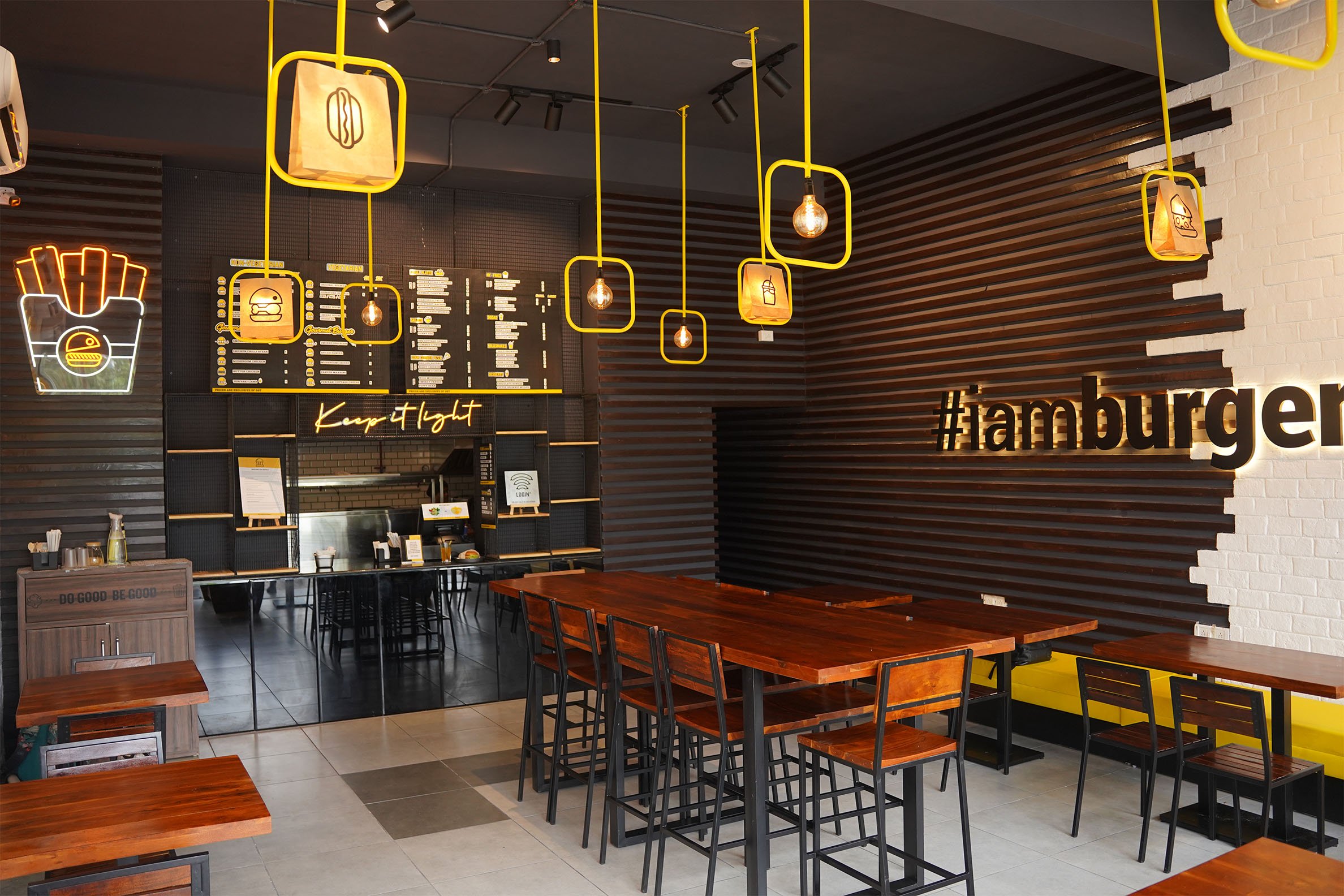
If you are an entrepreneur or investor looking at the food franchise space in India in 2026, ask yourself three things. Do you want a brand with a clear health-forward identity? Do you want a QSR franchise with flexible format options that fit your budget? And do you want a 40% ROI target backed by a real operational playbook?
If yes to all three, BurgerMan deserves your serious attention.
This is not a get-rich-quick pitch. Building any franchise takes the right location and local hustle. But with BurgerMan, the brand, systems, and supply chain are already working. Your job is to bring the energy and local market knowledge.
Investment starts from Rs. 35 lakhs for the Grab “N” Go format. The RestoCafé model is Rs. 45 lakhs and the Hybrid Gamezone is Rs. 65 lakhs. Budget from Rs. 50 lakhs for a full-featured outlet with complete setup.
BurgerMan is currently expanding across Tamil Nadu, Karnataka, and Andhra Pradesh. Active slots are available in Chennai, Bengaluru, Coimbatore, Hyderabad, Salem, and several Tier-2 towns where first-mover positions are still open.
BurgerMan provides complete brand guidance, staff training, supply chain support, and ongoing operational assistance. The master franchise for India is managed by Young Franchise Holdings, ensuring structured support at every stage.
Ready to own a BurgerMan franchise? Slots in key cities are filling up fast.
BurgerMan targets a 40% ROI for franchise partners, which is significantly higher than the industry average of 15 to 25% for most QSR franchises in India.
Yes. The Grab “N” Go format at Rs. 35 lakhs makes BurgerMan one of the more accessible burger franchise opportunities in India, especially compared to international QSR brands that require Rs. 1 crore or more to set up.
BurgerMan is currently expanding across Tamil Nadu, Karnataka, and Andhra Pradesh. Active slots are available in Chennai, Bengaluru, Coimbatore, Hyderabad, Salem, and several Tier-2 towns where first-mover positions are still open.
BurgerMan provides complete brand guidance, staff training, supply chain support, and ongoing operational assistance. The master franchise for India is managed by Young Franchise Holdings, ensuring structured support at every stage.
Franchise slots in key cities are filling up. Click here to Apply Now and take the first step toward owning a profitable burger café in India.